

A stroke in a dog or cat was thought to be very rare until recently. As more specialist tests including MRIs and CT scans have become available in the last few years, pets are becoming more likely to be diagnosed with strokes.
What is a stroke?
Strokes or cerebrovascular accidents are signs animals show when their brain’s blood supply is reduced. Strokes can be divided into two types:
- An ischemic stroke occurs when the brain is suddenly deprived of blood
- An haemorrhagic stroke occurs when a blood vessel bursts in the brain
What can cause a stroke?
Unlike any other organ, the brain relies on a constant blood supply for oxygen, nutrients, and waste removal. Whenever an affected artery fails to supply blood to the brain, brain function is severely disrupted (ischaemia) or parts of the brain are destroyed (infarct).
There are two main types of diseases that cause ischaemic stroke: thrombosis (narrowing of an artery) and embolism (clogging of an artery by material from elsewhere in the body).
During haemorrhagic strokes, blood can leak into the brain tissue itself (intraparenchymal haemorrhage) or between the brain and the skull (subdural or subarachnoid haemorrhage). Based on the location of the affected blood vessel, the bleeding site will vary.
What are the signs of a stroke?
Strokes in dogs and cats often appear differently than in humans. A drooping face or total paralysis on one side of the body are common signs of stroke in humans, but these are uncommon in dogs and cats. The most common signs include head tilt or turn, loss of balance, loss of vision, circling and falling. It is important to note that these signs are not specific to stroke and can also be seen in association with other brain diseases such as tumours or inflammation of the brain (encephalitis).
How do I diagnose a stroke?
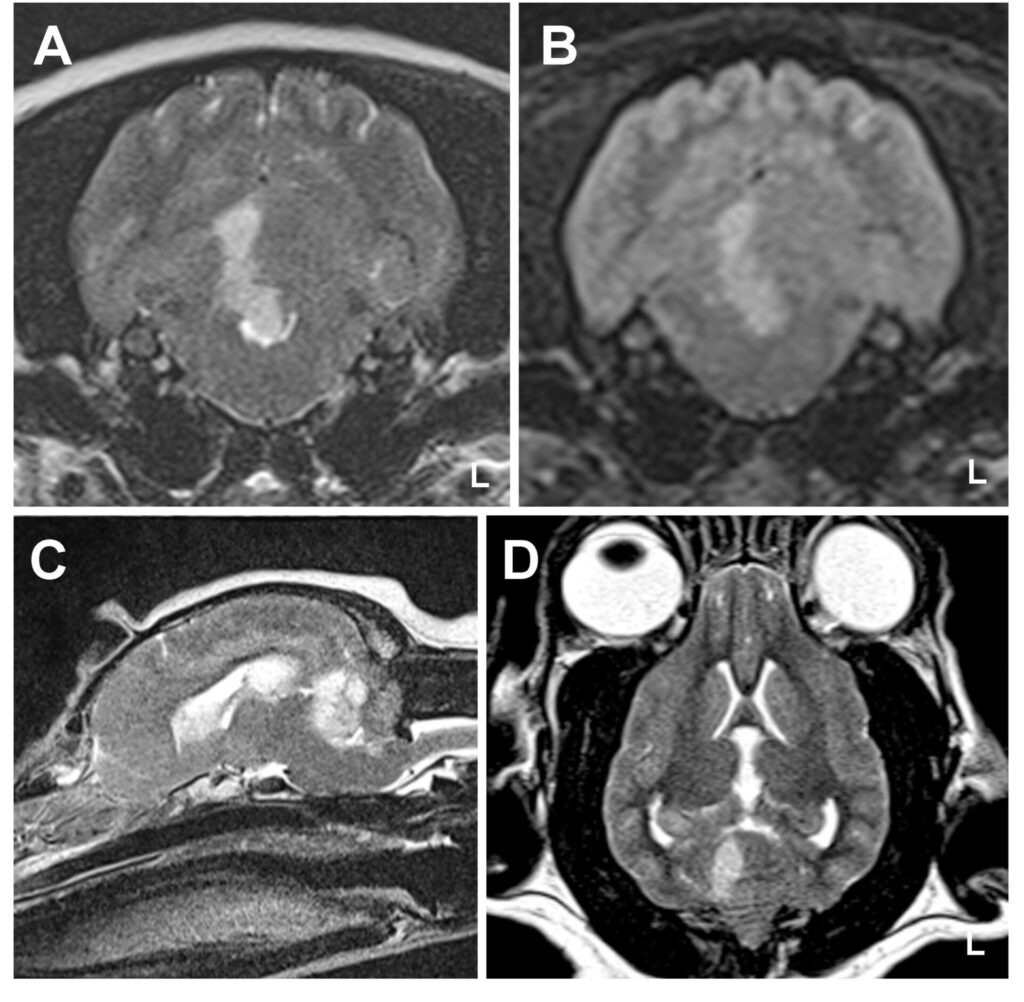
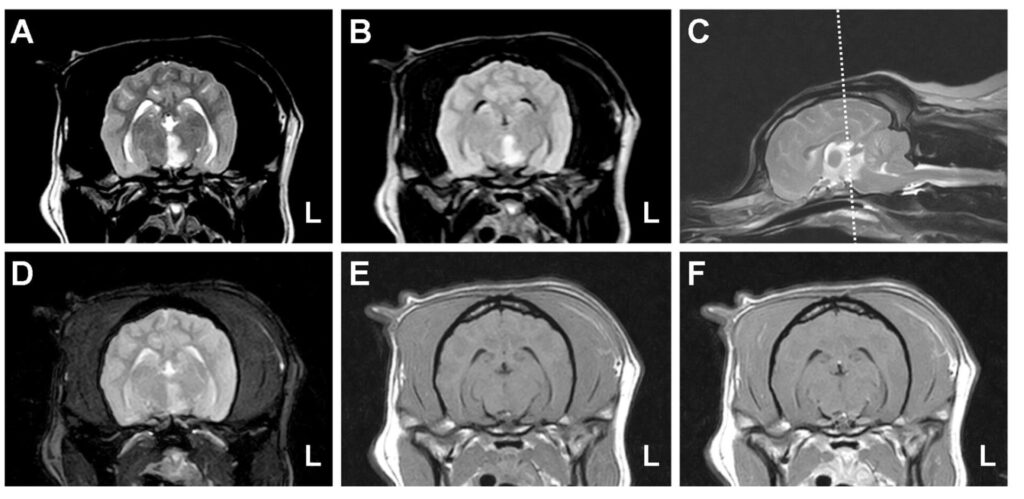
You may suspect that the patient has suffered a stroke based on the signs they are showing. Further tests, including brain imaging, will be needed to make a definite diagnosis. MRI (magnetic resonance imaging) scans can give an inside view of the brain (see caudal perforating artery image and borderzone infarct image on MRI). This diagnosis cannot be made with standard X-rays. As part of these tests, the pet will be anaesthetized, and a spinal fluid sample will be taken to check for other diseases that may cause similar signs.
Identifying particular brain changes can lead to the diagnosis of stroke, as well as ruling out other conditions (inflammation, infection, bleeding from a brain tumour, or metastatic tumour spreading to the brain). Following a stroke diagnosis, further tests will be needed to determine the underlying cause.
What causes strokes in dogs?
There are many medical conditions that can cause ischemic strokes in dogs and cats, including kidney disease, heart disease, thyroid disease, Cushing’s disease, diabetes, and high blood pressure (hypertension). Blood vessels supplying the brain can also be blocked by tumour fragments, fat, parasites, or spinal cartilage.
Over half of dogs with strokes have no underlying cause, despite thorough investigations.
In dogs and cats, haemorrhagic strokes can occur due to diseases that interfere with blood clotting (angiostrongylosis – a kind of lung worm), rodent poisons (warfarin-like products), immune-mediated thrombocytopenia, congenital clotting conditions, high blood pressure (kidney disease, heart disease, Cushing’s disease or thyroid disease), inflammation of the arteries (vasculitis) or abnormal development of blood vessels in the brain. Other causes of bleeding in the brain include head trauma, bleeding from a brain tumour or from a tumour spreading to the brain (especially common with tumours of the spleen).
Is there any treatment for stroke?
In the event of a stroke, there is no specific treatment that can repair the damage done to the brain. The focus should be on identifying the cause of the stroke and, if one is found, treating it to prevent further strokes. The key to a successful recovery is good nursing care.
Will my pet get better?
The majority of pets tend to recover within a few weeks with only supportive care. Strokes that damage a major part of the brain or cause severe disability may not be recoverable. What caused the stroke and whether it can be treated determines the long-term outlook and chances of another stroke happening.