
Cauda equina diseases (back problems)
It is not uncommon for dogs to suffer from back problems. There are many breeds that suffer from disc disease, but diseases of the spinal cord are also common. In addition to being painful, these diseases limit the mobility of a dog. Certain dogs can be helped by medical management, but severe cases may require surgery.
What is the cauda equina?
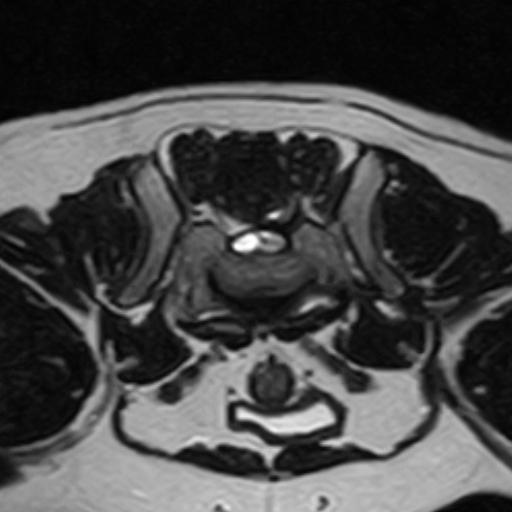
A section of the spinal cord is known as the cauda equina. It gets its name from the nine nerves that make up its structure (cauda = tail; equina = horse). The cauda equina is located at the base of the spinal cord (the tail of the spine). In addition to controlling the movement of the back legs and the tail, it also maintains urinary and faecal continence.
The spinal cord itself runs through a bony tunnel or channel within the vertebrae of the back. The bones surround and protect the delicate nervous system. Within the spine, the individual vertebral bones are interconnected and allow great flexibility between areas, e.g. neck, lower back. A mobile and flexible spine and a healthy spinal cord are essential for normal function.
What is cauda equina syndrome?
In cauda equina syndrome, nerves of the cauda equina become compressed or trapped. Pain and paralysis caused by nerve compression are common signs, along with faecal and/or urinary incontinence, and lameness of the pelvic limbs (similar to sciatica in people). Degenerative lumbosacral stenosis is the most common disease causing problems (see factsheet). The vertebrae in the spine (vertebrae) become narrow in this disease, placing pressure on the delicate nerves inside them. Large breed dogs, such as German Shepherds, are most likely to suffer from lumbosacral stenosis. The cauda equina nerves can also be compressed by other diseases, such as tumours or inflammation, but these are less common than degenerative lumbosacral stenosis.
Why does it develop?
The narrowing of the vertebral canal and pressure on nerves are often caused by disc disease. Discs between vertebrae act as cushions, but as in humans (e.g. people with slipped discs), they can become diseased. Dogs with lumbosacral stenosis may have a bulge in the disc that compresses the nerves. Nerve compression may also be exacerbated by thickening of other structures in the area.
There are several other conditions that can cause similar signs in dogs, including:
- There is a condition known as discospondylitis that affects the discs in the spine and the surrounding bones. Lameness, pain, and fever are common signs in affected dogs. It is usually treated with antibiotics and sometimes with surgery.
- It is possible for the back to be damaged by trauma such as falling or being involved in a road accident. There may be a need for strict rest or surgery as a treatment option.
- There is a possibility that tumours can compress the cauda equina. It depends on the type and location of the tumour whether it can be treated.
- Similar signs can be caused by congenital problems.
- Fibrocartilaginous embolism occurs when a small portion of damaged disc detaches and interferes with blood flow to the cauda equina nerves. A dog usually recovers from this if the spinal cord is not permanently damaged by the embolism (see factsheet).
How do I know if the dog has cauda equina syndrome?
These signs are most often seen in large dogs between middle and old age, but are also seen in young adult working dogs. It is common for affected animals to yelp when they jump into a car or negotiate steps. In addition to showing pain around the lower back (at the tail base), they may appear weak on their hind legs. It is possible for the nails of the back paws to be scuffed and worn down abnormally. The dog may suffer both faecal and urinary incontinence in severe cases, and there may be lameness in one of the back legs. This is often most noticeable at rest when the limb may be held completely off the floor.
Some of these signs may also be caused by hip dysplasia and arthritis, so accurate diagnosis is essential.
Is there any treatment for the condition?
Treatment and outcome depend on the cause of the condition in each case. Rest, painkillers, and avoiding circumstances that cause pain can help affected dogs. Make sure the dog’s environment is free of steps and jumping activities. If pain is severe, place a thick blanket under the dog’s abdomen just in front of the hind legs and use this to help support the weight. Provide the dog with plenty of thick bedding. A moderate amount of exercise should be performed on a regular basis. You may be able to refer the dog for acupuncture, which has been reported to have some beneficial effects with analgesia. Overweight dogs may benefit from weight loss. Dogs with relatively mild signs, as well as those older dogs who do not desire surgery, may benefit from this treatment.
Surgery is the best option for more severe cases, especially if other measures fail. The compression on the nerves can be permanently relieved through back surgery. After a successful surgery, the outlook is usually good. For this procedure, the dog should be referred to a specialist neurologist or orthopaedic surgeon.