
Expressions of the face are controlled by the facial nerve. Among its functions are closing the eyelid, moving the ears, retraction of the lips, and opening of the nostrils. There is a high prevalence of facial paralysis in dogs and cats, especially in those who are middle-aged or older. There is drooping of muscles in the face, which is caused not by damage to the muscles themselves, but by damage to the nerves that supply them.
What is facial paralysis?
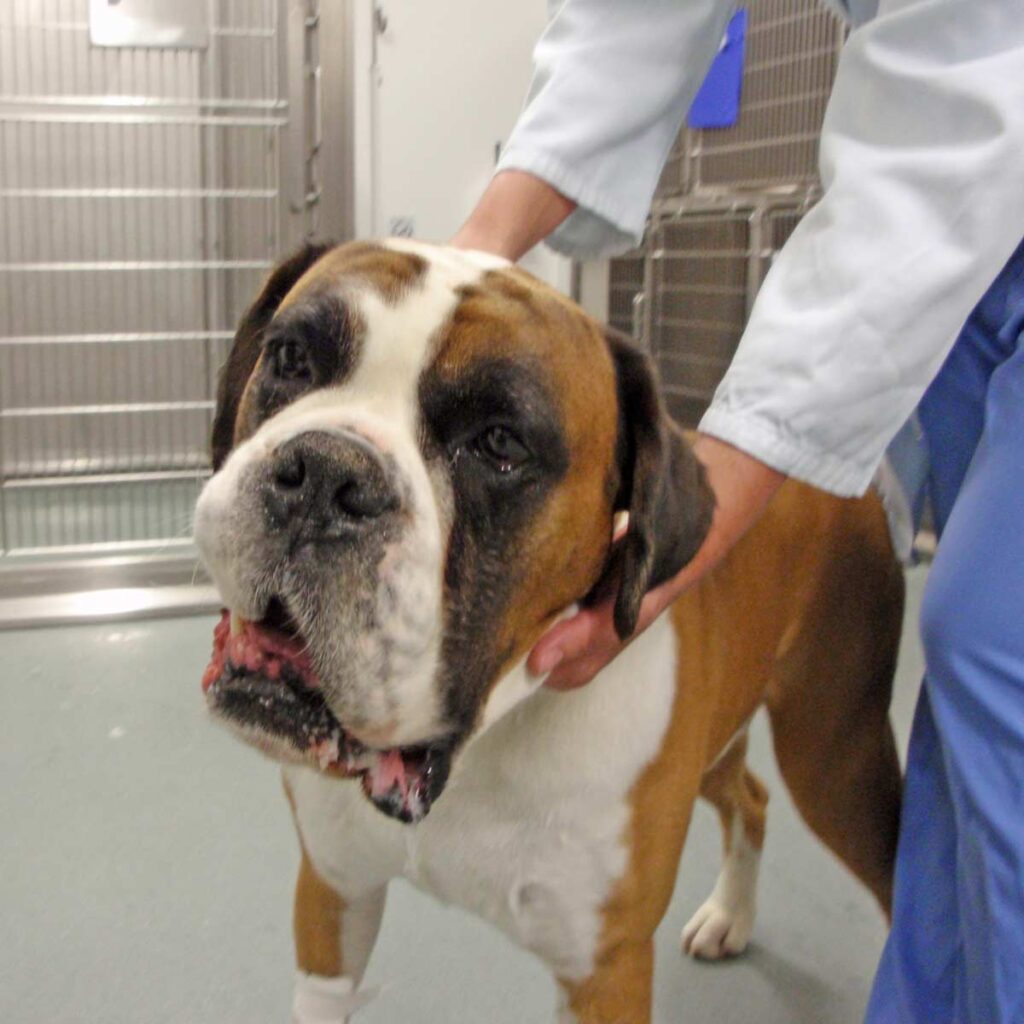
A dog or cat with facial paralysis has a drooping face on one side (similar to a person after a stroke, but with a completely different underlying cause). On the affected side, the lip hangs down and one ear is held lower than the other. There is a tendency for affected dogs to dribble saliva and drop food from the side of their mouth and they are unable to blink. There are times when the same signs appear on both sides of the face, making it difficult to identify the changes.
What causes facial paralysis?
In humans, sudden facial paralysis is a common symptom of stroke. In most cases, however, facial paralysis in dogs and cats is caused by direct damage to the facial nerve, which controls the muscles in the face. This nerve comes from the back of the brain to control the muscles of facial expression (ears, lips, eyelids and nostril).
Idiopathic facial nerve paralysis is the most common cause of facial nerve paralysis in dogs, while ear or throat polyps (abnormal tissue growths) or deep-seated ear infections are the most common causes in cats. The term idiopathic refers to conditions whose cause is not known. As a result, in an idiopathic disease, all test results will be normal. Human medicine recognizes a similar condition called Bell’s palsy.
Infections of the ear (otitis media/interna) are the second most common cause of facial nerve paralysis in dogs. As well as facial paralysis, Horner syndrome (decreased pupil size and third eyelid coming across the eye – see Horner syndrome factsheet) and/or vestibular syndrome (head tilted one way and balance loss) are frequently seen.
How do I diagnose facial nerve paralysis?
In dogs, idiopathic facial nerve paralysis is the most common cause of this disease, but other causes may need to be ruled out. In order to detect signs of ear infection (such as a ruptured eardrum or inflamed ear canal), a thorough ear examination should be conducted (if necessary under sedation or anaesthesia). A CT or MRI scan can be used to examine deep parts of the ear and brain if the results of this examination are normal. Unfortunately x-rays are often normal in cases of deep ear infection. It may be necessary to take a sample of fluid from around the brain to check for signs of inflammation or the spread of an ear infection.
What is the prognosis for facial nerve paralysis?
Despite the fact that the signs are often permanent (even when an underlying cause is identified and treated adequately), they rarely have any significant impact on the quality of life of the animal. If there is no underlying cause for the nerve damage, the outlook is good. It takes a few weeks for the early signs (drooling of saliva, dropping of food, and a floppy lip) to be replaced by the ‘chronic’ signs. Despite being unable to move their lip, the droopy lip will contract so that it regains its normal size and shape. Rarely, the opposite side of the face may also begin drooping later on. There is a more guarded outlook for dogs with deep ear infections due to the possibility of irreversible nerve damage and permanent paralysis.