
When a dog or cat presents with neurological clinical signs, the most important question is rarely “can we do a scan?”. The real question is “should we scan, what should we scan, and how will the result – normal or abnormal – change what we do next?”.
This is where specialist-led neurology makes a crucial difference. At Movement Referrals, advanced imaging is never used in isolation or as a screening exercise. It is the final step in a structured neurological assessment designed to answer a very specific clinical question.
Neurology starts with localisation, not imaging
Neurology is fundamentally about localisation. Before any imaging is considered, a detailed neurological examination is performed to determine where in the nervous system the problem is most likely to be – brain, spinal cord (and which region), peripheral nerves or neuromuscular junction.
Only once this localisation has been established can we decide:
- whether imaging is indicated,
- whether MRI or CT is the most appropriate modality,
- which anatomical region should be scanned, and
- which sequences or protocols are required.
The best neurologists are not those who scan the most – but those who know when to scan, what to scan, and how to interpret the result in context.
Choosing the right scan for the right reason
MRI vs CT
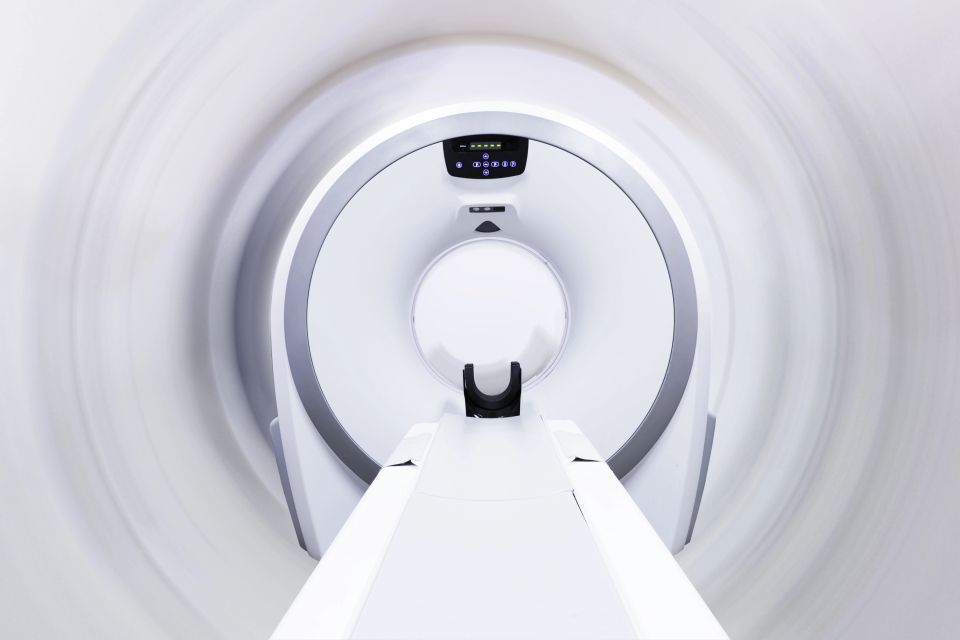
MRI is the modality of choice for most neurological conditions because it provides unparalleled soft tissue detail of the brain and spinal cord. It is particularly valuable for inflammatory disease, neoplasia, vascular events, congenital abnormalities and many causes of seizures or ataxia.
CT, however, remains extremely useful in specific scenarios – for example acute trauma, bony disease, certain nasal or middle ear conditions, and some spinal disorders where osseous detail is critical.
At Movement Referrals, the choice between MRI and CT is driven by the suspected disease process, not by availability or convenience. This ensures that each patient undergoes the most informative investigation possible, first time.
Scanning the right area is just as important as scanning at all
One of the most common causes of diagnostic uncertainty in neurology is not that a scan was “normal”, but that the wrong area was scanned.
For example:
- A dog with thoracolumbar myelopathy will not benefit from a brain MRI,
- A focal cervical spinal cord lesion may be missed if only part of the spine is
imaged, or - A patient with neuromuscular disease may have a completely normal brain and
spinal MRI – and that is diagnostically meaningful.
At Movement Referrals, imaging protocols are tailored to the neurological localisation identified on examination. This means we are not simply “doing an MRI”, but performing a targeted study designed to interrogate the most relevant part of the nervous system.
Why a normal MRI can be a very good thing
For owners, being told that an MRI scan is normal can feel confusing or even worrying – particularly if their pet is showing severe neurological clinical signs. It can raise concerns that “something has been missed”.
In reality, when imaging is performed appropriately and interpreted by an experienced neurologist, a normal result can be extremely powerful.
A normal MRI can:
- rule out serious structural disease such as tumours or inflammatory brain
disease, - support a diagnosis of idiopathic epilepsy in a dog with seizures,
- point towards metabolic, toxic, neuromuscular or functional disorders,
- help exclude compressive spinal disease and avoid unnecessary surgery, and
- allow confident initiation of targeted medical therapy.
In many cases, it is the absence of visible abnormalities – in the right place, on a properly performed study – that allows us to narrow the differential diagnoses and move forward with confidence.
Interpreting the scan in the context of the patient
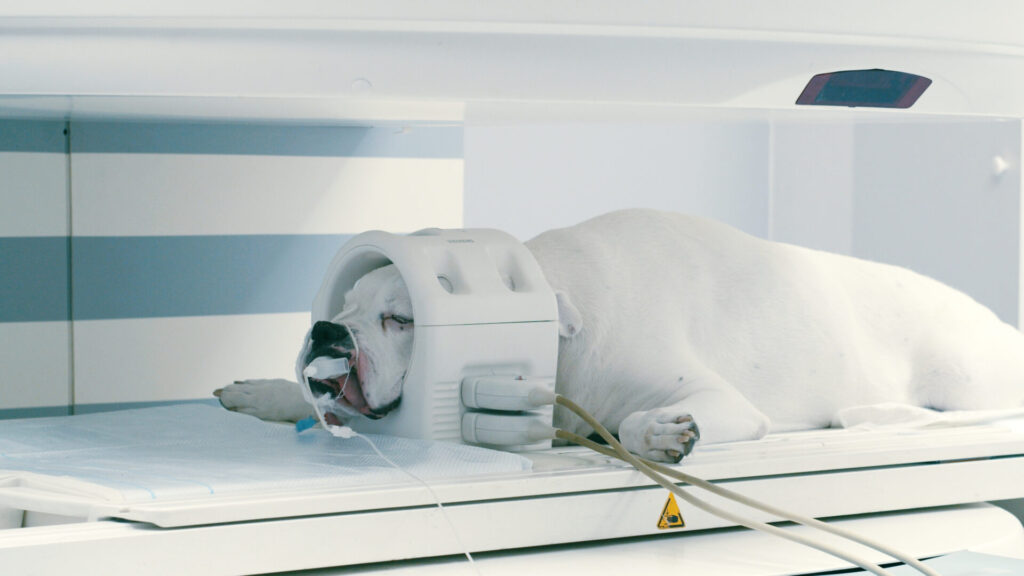
Advanced imaging does not provide answers in isolation. MRI and CT findings must always be interpreted alongside the neurological examination, history and progression of clinical signs.
Incidental findings are common, particularly in older animals. Equally, subtle changes may be highly significant when viewed through the lens of a careful neurological assessment.
At Movement Referrals, scans are interpreted by neurologists who have examined the patient themselves. This ensures that imaging findings – including normal studies – are placed into their correct clinical context and used to guide decision-making rather than create uncertainty.
How this benefits your patient
Because imaging at Movement Referrals is neurologist-led from start to finish, it allows
us to:
- avoid unnecessary or poorly targeted scans,
- reach diagnoses more efficiently,
- reassure owners when serious disease has been excluded,
- tailor treatment plans precisely to the underlying condition, and
- ensure the right steps are taken at the right time.
Whether a scan reveals a clear abnormality or appears entirely normal, it provides valuable information that helps us move forward with clarity rather than guesswork.
Advanced imaging is one of the most powerful tools in veterinary neurology… but only when used thoughtfully
At Movement Referrals, our expertise lies not just in performing MRI or CT scans, but in knowing when they are indicated, how to perform them properly, and how to interpret the results – including normal findings – in a way that directly benefits each individual patient.
This is how imaging helps us deliver the accurate diagnoses and carefully tailored treatments that pets with neurological disease need.